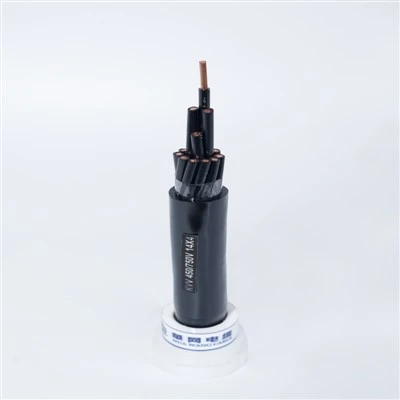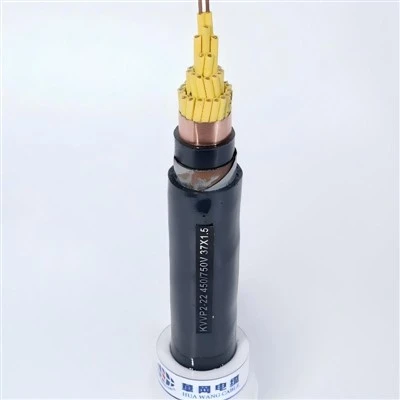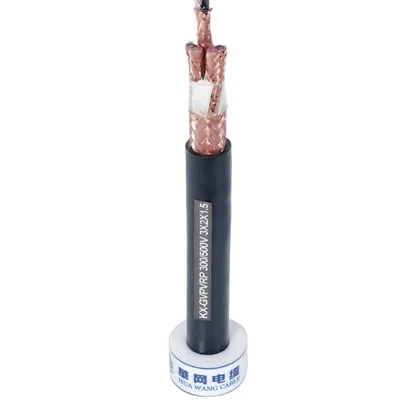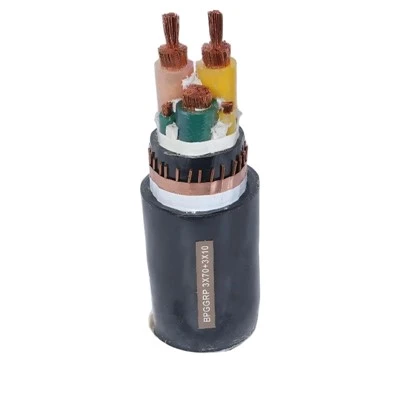


Compensating Cable for K Type Thermocouple is designed to connect K-type thermocouple sensors with temperature measuring instruments while maintaining accurate temperature signal transmission.
Available Cable Types
KX Series
Standard K-type compensating cable using NiCr-NiAl conductors for accurate temperature signal transmission.
KC Series
Suitable for shorter-distance compensation applications with cost-effective design.
KCA / KCB Series
Available with different insulation and sheath combinations for specific environmental requirements.
Shielded Versions
Designed for applications where electromagnetic interference may affect temperature signal stability.
Cable Construction
The cable consists of thermocouple compensating conductors, insulation layers, optional shielding, and protective outer sheath.
|
Component |
Description |
|
Conductors |
K-type compensating alloy wires (NiCr-NiAl or equivalent) |
|
Insulation |
PVC, PTFE, FEP, fiberglass, or customized materials |
|
Shielding |
Aluminum foil or tinned copper braid optional |
|
Outer Sheath |
PVC, silicone rubber, or fiberglass braid |
|
Color Code |
According to IEC 60584-3 or ANSI MC96.1 |
Designed for Accurate Temperature Measurement
Maintains Thermocouple Signal Accuracy
The cable uses compensating conductors with thermoelectric characteristics matched to K-type thermocouples, helping maintain reliable temperature signals between sensors and measuring instruments.
Reduces Measurement Errors
Proper compensation cable selection helps reduce additional thermoelectric voltage errors caused by unsuitable extension wiring, improving overall measurement accuracy.
Adapts to Different Operating Conditions
Available insulation and sheath materials allow the cable to operate in environments involving heat, chemicals, oil exposure, vibration, and electromagnetic interference.
Technical Specifications
|
Item |
Specification |
|
Thermocouple Type |
K Type (NiCr-NiAl) |
|
Temperature Range |
-20°C to +200°C (PVC), up to +400°C (FEP/Fiberglass) |
|
Rated Voltage |
300V |
|
Insulation Resistance |
≥100 MΩ/km |
|
Test Voltage |
1.5 kV / 1 min |
|
Accuracy |
±1.5°C or ±0.4% of reading |
|
Shield Options |
Aluminum foil / Tinned copper braid |
|
Standards |
IEC 60584-3 / ANSI MC96.1 |
Insulation & Protection Options
Different materials are available according to installation environment.
|
Application Requirement |
Recommended Construction |
|
General industrial temperature measurement |
PVC insulation and sheath |
|
High-temperature equipment |
PTFE/FEP insulation or fiberglass protection |
|
EMI-sensitive environments |
Shielded construction with copper braid or foil |
|
Chemical or harsh environments |
Silicone or fluoroplastic materials |
Typical Applications
Thermal Processing Equipment
Industrial furnaces
Kilns
Heat treatment equipment
Ovens
Laboratory & Testing Systems
Temperature measurement instruments
Testing equipment
Research facilities
Industrial Automation
Temperature controllers
PLC monitoring systems
Process control equipment
Energy & Chemical Industries
Power generation systems
Chemical processing equipment
Metallurgical applications
Customization Options
We provide customized thermocouple compensating cables according to application requirements:
- Conductor type (KX, KC, KCA, KCB)
- Conductor size
- Number of cores
- Insulation material
- Shielding structure
- Sheath material
- Color coding
- Cable length and packaging
Quality Control & Testing
Each production batch is inspected to ensure reliable temperature signal transmission and consistent quality. Quality checks include:
Conductor composition inspection
Electrical resistance testing
Insulation resistance testing
Voltage withstand testing
Temperature tolerance verification
Dimensional inspection
Final appearance inspection
Inspection reports and third-party testing are available upon request.
Packaging & Logistics
Packed in coils, reels, or export-standard cable drums according to cable size and order requirements.
Each package is labeled with cable type, specification, length, and production batch information.
Protective packaging helps prevent moisture and mechanical damage during transportation.
MOQ: Usually 500–1000 meters per specification, depending on cable type and customization requirements.
Lead Time: Standard products are typically delivered within 7–15 working days. Customized thermocouple cables may require additional production time.
Why Choose Us
Specialized manufacturing capability for thermocouple compensating cables.
Support for different K-type cable structures and insulation solutions.
Strict quality control to ensure stable temperature measurement performance.
Flexible customization for industrial automation and process control applications.
Reliable production capacity for OEM and project-based requirements.
Applications


Available Models


FAQ
Hot Tags: compensating cable for k type thermocouple, China compensating cable for k type thermocouple manufacturers, suppliers, factory, compensating cable, Compensating Cable for K Type Thermocouple, Compensating Cable for R Type Thermocouple, KX HA FGP Thermocouple Compensation Cable, KX HS FPFP Thermocouple Compensation Cable